Protected Trees
Practical advice where protected trees create a real problem
Tree Preservation Orders and Conservation Area controls don’t make tree management impossible, but they do mean that proposed work needs to be properly considered and, where required, supported by appropriate arboricultural evidence.
I advise clients where protected trees interact with buildings, hard surfaces, access, development or the reasonable use of land.
The starting point is the tree and the site, not a predetermined answer.
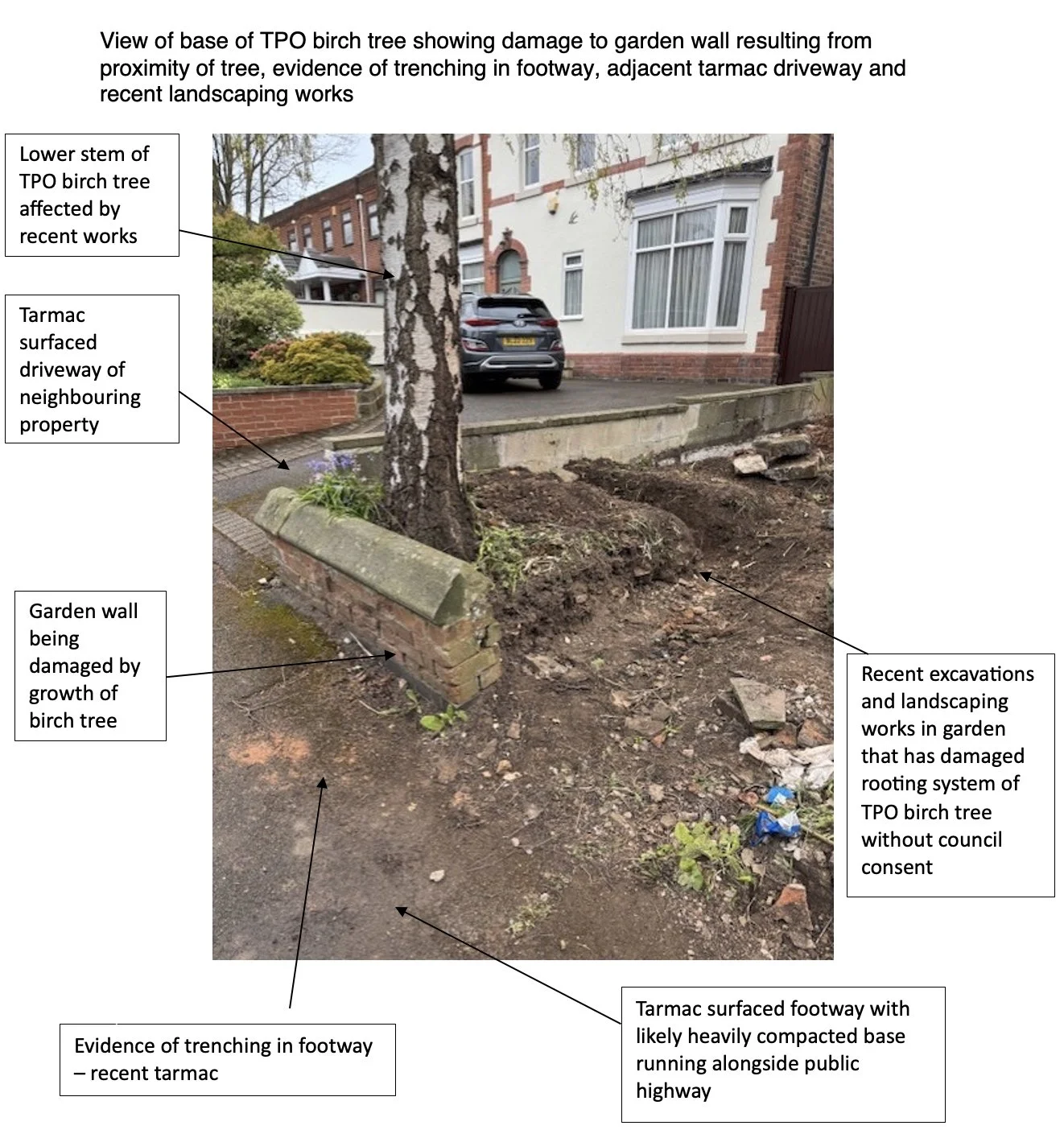
When a simple application is not enough
Some proposals are straightforward.
Others need a clear explanation of what is happening, why intervention is necessary, what alternatives have been considered and why the proposed work is reasonable.
I can inspect the site, assess the tree and its surroundings, consider realistic management options and prepare the arboricultural information required to support the application or notification to the local planning authority.
Typical work includes:
reports supporting pruning or removal of TPO trees
conservation area tree matters
roots affecting paving, walls or other hard surfaces
assessment of alternative remedial alternatives
replacement planting proposals
revised proposals following refusal or concern from the local authority
specialist reports where the arboricultural issues need more explanation than an application form can provide
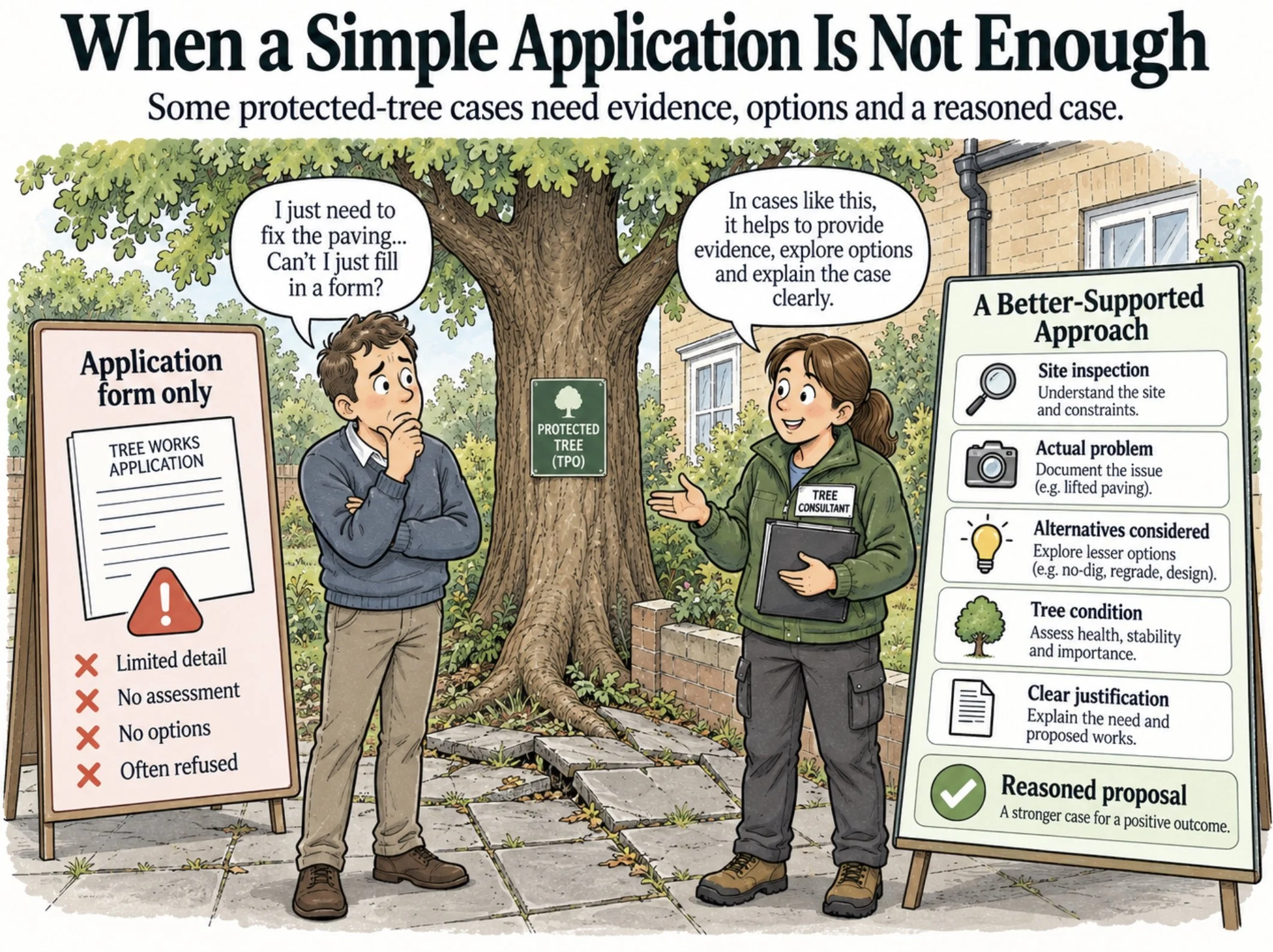
Evidence rather than assertion
Saying that a tree is inconvenient, too large or causing a problem is rarely enough.
A stronger case identifies the actual problem, establishes the relevant tree and site characteristics, considers realistic alternatives and explains why the proposed work is proportionate.
My reports are structured so that the decision maker can follow that reasoning without having to reconstruct the argument from disconnected information.
Root related damage and hard surfaces
Tree roots and hard surfaces often make uncomfortable neighbours.
Lifting paving, damaged surfacing or restricted access can create genuine problems, but tree removal is not the only solution.
The relevant questions may include establishing the extent and cause of the damage, the importance and condition of the tree, available engineering or surfacing options, accessibility requirements, future growth and the consequences of retaining or removing the tree,
I assess those factors together rather than treating the tree or the surface in isolation.
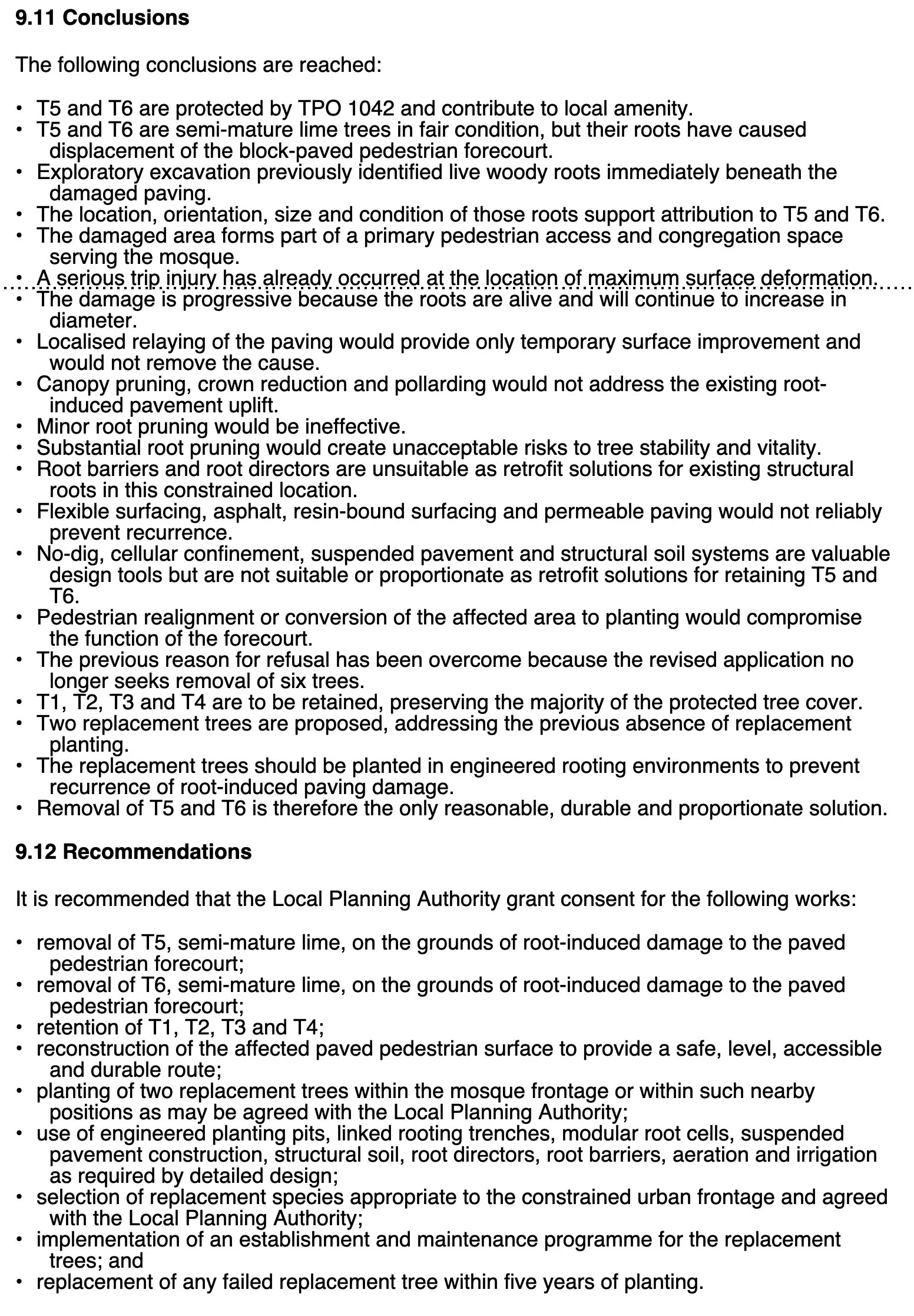
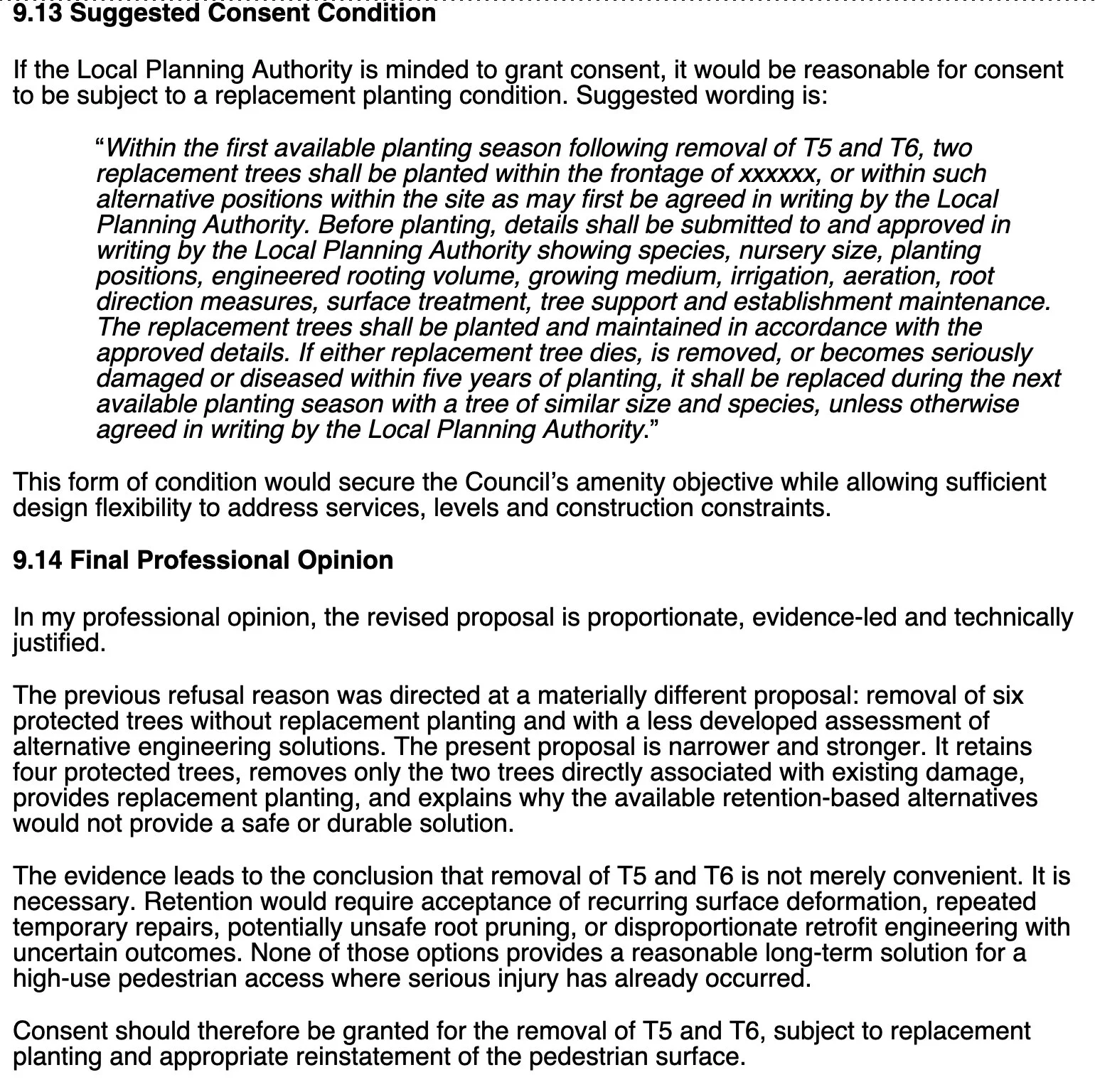
A pedestrian surface had been progressively displaced by roots associated with protected trees. the issue involved more than the presence of roots. Pedestrian accessibility, existing damage, future root growth, available surfacing solutions, replacement planting and the consequences of retaining or removing individual trees all required consideration.
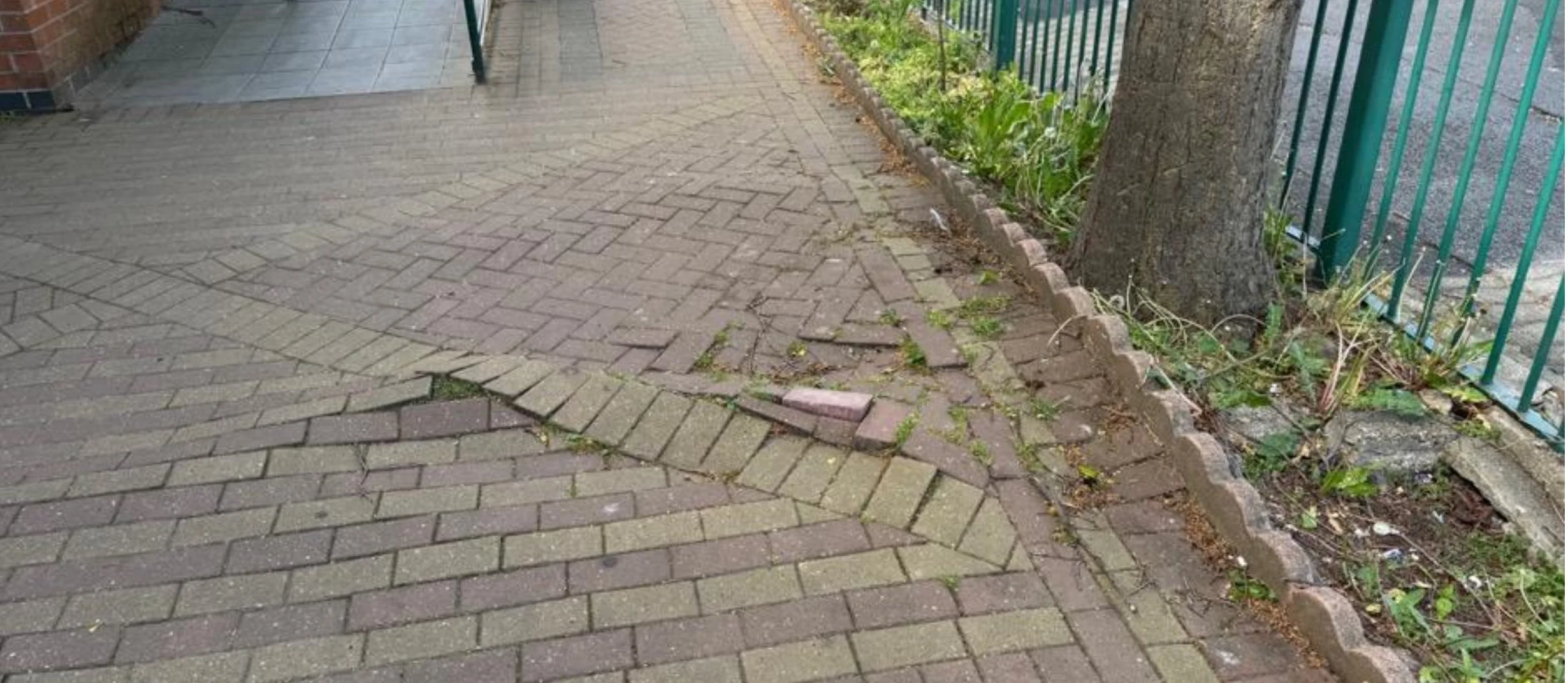
I prepared a detailed report examining the alternatives and setting out a reasoned proposal for submission to the local planning authority.
Removal can sometimes be the appropriate answer
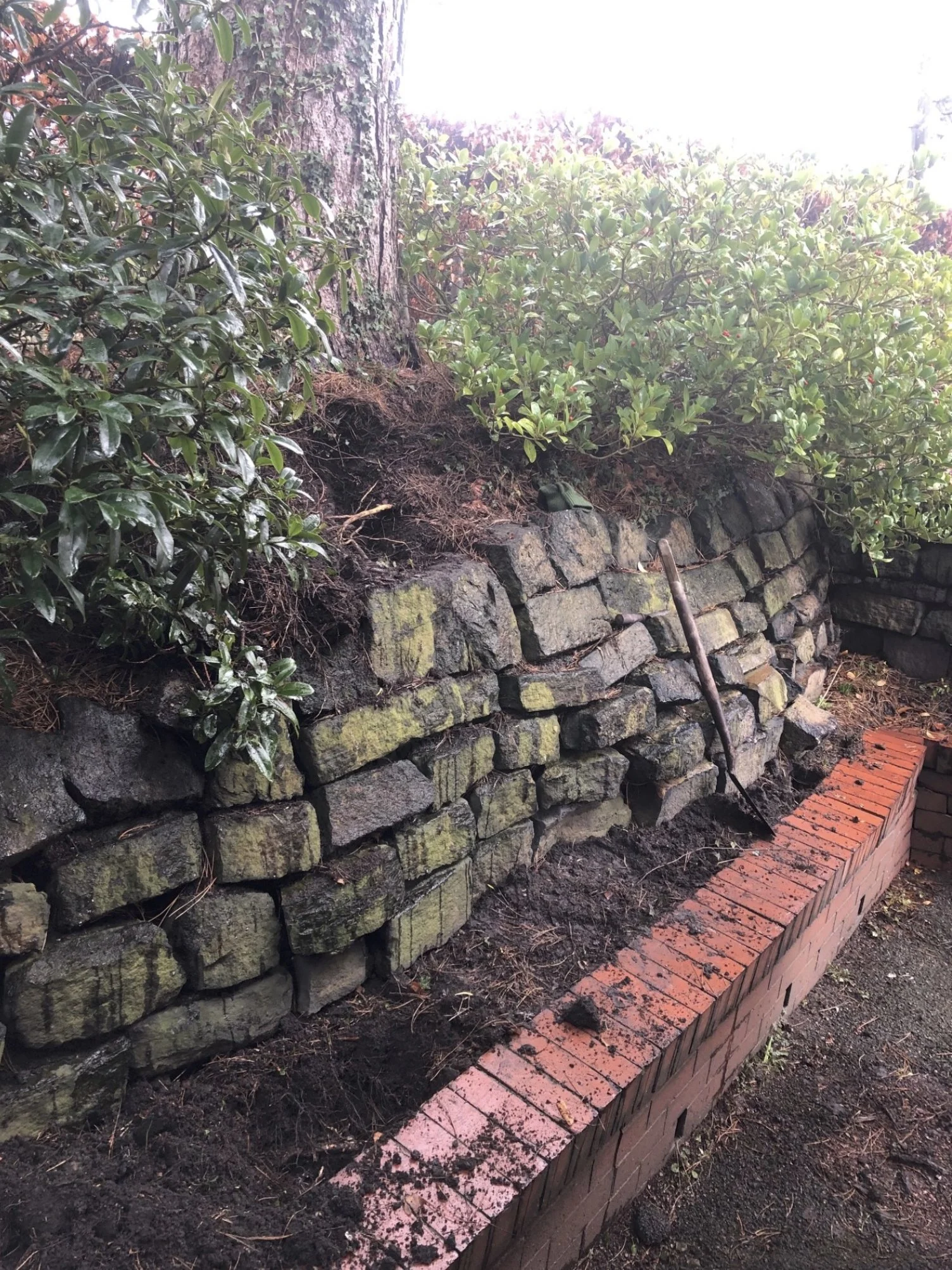
Protected status does not mean that a tree must be retained regardless of circumstances.
there are situations where removal may be justified because of condition, structural concerns, unreasonable conflict with the built environment, site constraints or the absence of a satisfactory long term alternative.
Where removal is professionally justified, my role is to explain the arboricultural reasoning clearly and support the proposal with appropriate evidence.
where it is not justified, I will say so and consider whether another management solution is more realistic.
Difficult cases and previous refusals
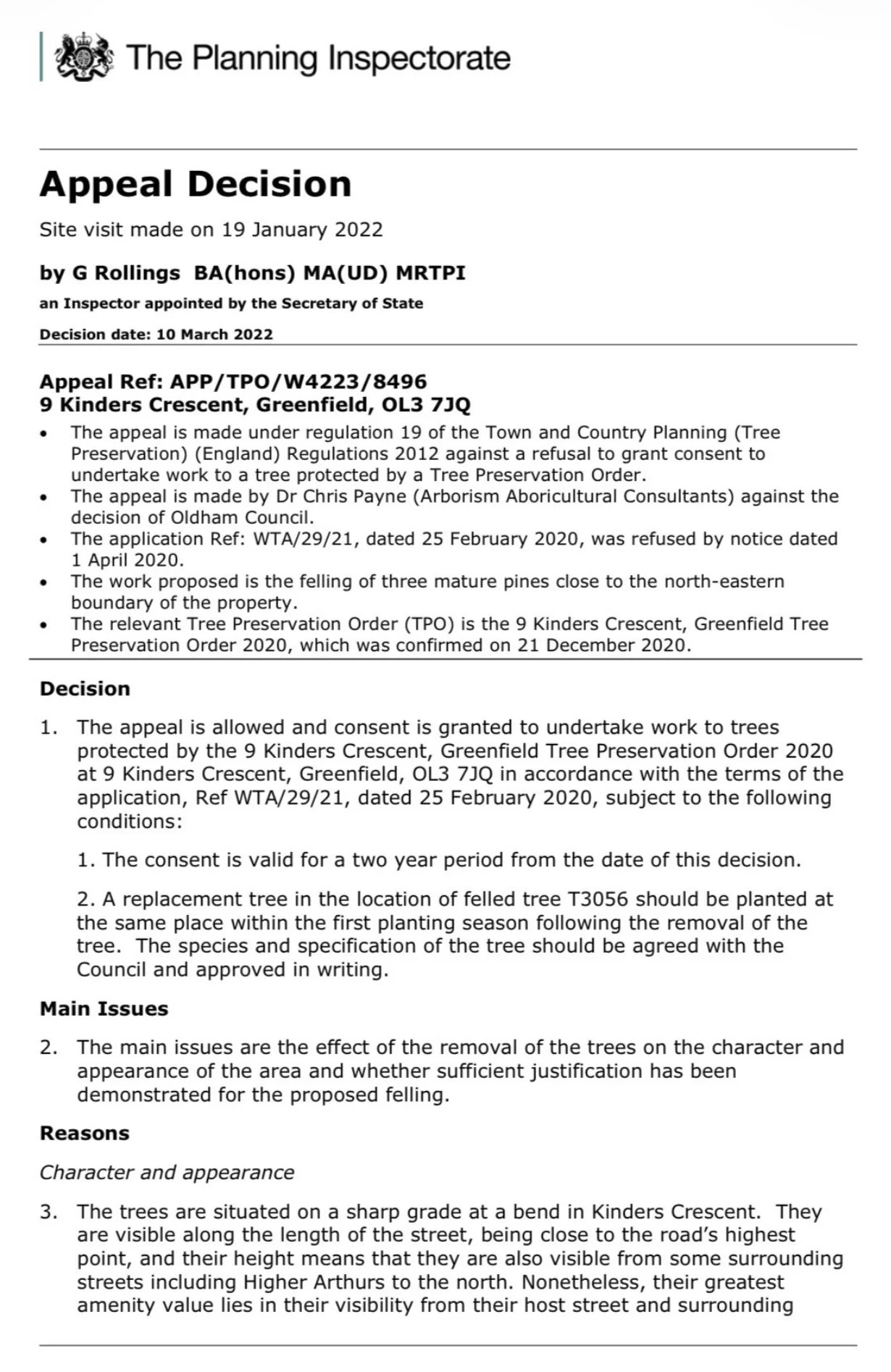
A refusal does not necessarily mean that nothing can be done.
It may mean that the original proposal was insufficiently justified, that alternatives were not adequately considered, or that a different approach is required.
I can review the decision, inspect the tree and site, assess whether the underlying problem remains capable of resolution and, where appropriate, prepare a revised arboricultural case.
I have a good track record with success with appeals to the Planning Inspectorate.
A practical approach to protected trees
My approach is deliberately practical.
I am interested in the interaction between the tree, the site and the people using it.
That means considering amenity, tree condition and longevity alongside buildings, access, safety, constructions, maintenance and reasonable use of the property.
the objective is a defensible solution, not the longest report.
Experience on both sides of the process
My protected tree work is informed by long term independent consultancy and extensive experience dealing with protected trees within local government.
I understand both the evidence an applicant needs to present and the issues a Tree Officer is likely to examine when assessing a proposal.
PhD in Forestry | Professional Member of Arboricultural Association | Fellow of the Royal Society of Arts | 20 years independent consultancy | 9 years local authority trees and landscape experience